
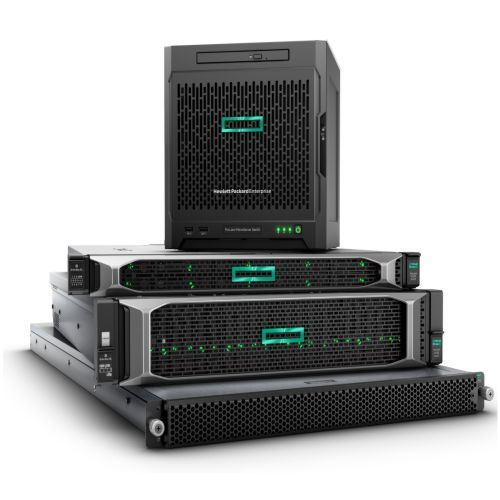
Servers (Rack, Tower, Blade)
In the modern digital landscape, servers are the backbone of business operations, powering everything from websites and applications to data storage and virtualization. Choosing the right server type—Rack, Tower, or Blade—can dramatically impact performance, scalability, and efficiency.
1. Rack Servers
Rack servers are designed to be mounted in standard server racks, making them ideal for data centers and businesses with limited space. They offer high density, easy scalability, and centralized management. Popular rack server brands and models include Dell PowerEdge R-Series, HP ProLiant DL-Series, and Lenovo ThinkSystem SR-Series. These servers support multiple processors, large memory capacity, and high-speed networking options, making them perfect for enterprise workloads and virtualization.
2. Tower Servers
Tower servers resemble traditional desktop computers and are suitable for small to medium-sized businesses. They provide quiet operation, expandability, and easy maintenance. Examples include Dell PowerEdge T-Series, HP ProLiant ML-Series, and Lenovo ThinkSystem ST-Series. Tower servers are ideal for file storage, print services, and small application hosting.
3. Blade Servers
Blade servers are compact, modular servers designed to optimize space and energy efficiency. By sharing power and cooling in a single chassis, they allow businesses to run multiple servers in a smaller footprint. Leading models include Cisco UCS B-Series, HPE BladeSystem, and Dell PowerEdge M-Series. Blade servers are excellent for high-density computing, cloud infrastructure, and virtualization environments.
At our platform, we provide detailed product insights, specifications, and comparisons to help businesses select the most suitable server solution. Whether it’s enterprise-grade rack servers, cost-effective tower servers, or high-density blade servers, we guide you in making an informed choice to meet your performance, storage, and scalability needs.